
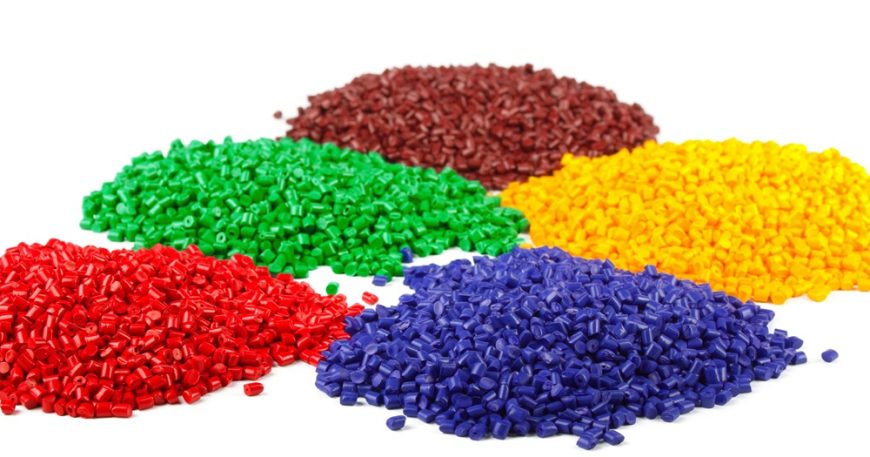
Plastic production and recycling often involves the reduction of the plastic in to plastic granules or pellets. In the case of recycling plastic products are often separated by color using rectangular sieves (plastic granules sieve) for plastic granules before they are recycled. The plastic recyclables are then shredded. These shredded fragments then undergo processes to eliminate impurities like paper labels. This material is melted and often put into pellet forms which are then used to manufacture other products.
PE Screeners
Polyethylene (or polythene) is the most common plastic. PE’s primary use is in packaging (plastic bag, plastic films, geomembranes, containers including bottles, etc.). Polyethylene catalyst technologies are generally utilized in slurry processes for the production of high-density polyethylene. This gives consistent morphology and creates narrow particle size distribution in the catalysts which help lower PE production costs by increasing plant throughput by reducing the frequency of plant shutdowns. VAAPRO ’s line of industrial vibrating sieves is used by some of the largest chemical companies in the world to efficiently (and at high capacity) separate and classify chemical materials including polyethylene catalysts by size and in so doing reduce production costs for PE.
PVC Screeners
Polyvinyl chloride (PVC) is one of the most widely produced plastics, after polyethylene (PE) and polypropylene (PP). The raw material used in PVC production is produced in water with particles of 50~200 μm diameter (in slurry form). Thereafter the slurry is dehydrated, dried and the particle size controlled by screening to yield PVC in the form of a white powder. VAAPRO ’s line and Ultrasonic vibrating sieves has an history of screening PVC powder and achieving a high capacity and very good efficiency levels whilst separating the PVC powder on a mesh opening between 6mm down to less than 200 micron.
PET Screeners
PET (polyethylene terephthalate) is mostly used in the production of synthetic fibers (in excess of 60%), with plastic bottle production accounting for around 30% of global demand. There is a large industry focused on recycling PET (plastic bottles). This includes crushing, washing, separating and drying. Recycling companies further treat the post-consumer PET by shredding the material into small fragments. These fragments still contain residues of the original content, shredded paper labels and plastic caps. All that parts are removed by different processes, resulting in pure PET fragments, or “PET flakes”. PET flakes are used as the raw material for a range of products that would otherwise be made of polyester.
VAAPRO line of industrial vibrating sieves is used by many recycling companies around the world to separate and classify the PET flakes by size (<1 mm and at high volume) and in so doing enable the cleaning of the flakes from other residue.
 English
 Italian
 Nederlands
 Français
 Deutsch